Some Notes on the Roundel
By Tom Will

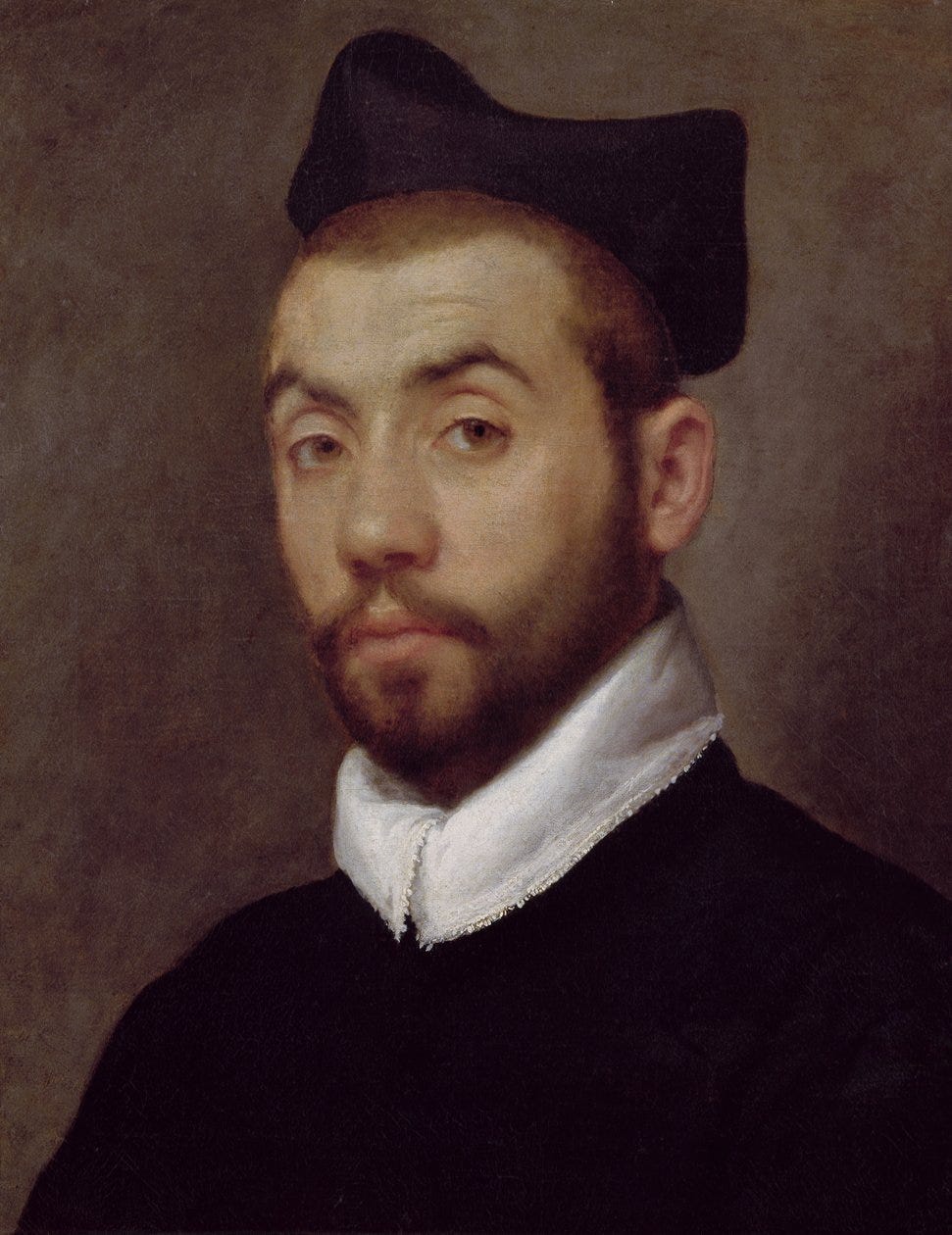
The Roundel was a poetic form invented by Algernon Charles Swinburne in his 1883 poetry collection: A Century of Roundels.
If you pick up a biography of Swinburne, such as Swinburne: The Poet in his World by Donald Thomas, you would not hear the title of this poetry collection of Swinburne’s mentioned once. You would however find a great deal of practically useful information if one was a time traveler to Victorian England and looking for a brothel specializing in “The English Preference”. We cannot blame Donald entirely for the omission of the Century of Roundels, as his book is rather short, and the collection rather less than crucial to a general interest of the poet. I have not read any other recent biographies of Swinburne, but I would not be surprised if they all failed to mention the Roundels. And if we turn to a biography much closer to its’ source, such as Edmund Gosse’s 1917 The Life Of Algernon Charles Swinburne, the term Roundel only occurs on one page, which I quote:
“…He determined, for the sake of self discipline, to abandon for a time his broad and sweeping measures, and to curb his Pegasus with a rigidly-determined fixed form. He chose the rondeau, that metrical structure in eleven lines, knit together by two rhymes, and with a refrain, thrice repeated, the laws of which were laid down by Clement Marot in the sixteenth century. Swinburne anglicised the word, and called his little poems “ roundels,” which, however, was not fortunate, because another and still earlier form of verse, which is quite distinct, bears the name of “ rondel.” The essential laws which govern the construction of the rondeau admit a very considerable elasticity within their circle, and Swinburne showed a marvellous aptitude in combining variety with an exact observance of the essential laws. He composed one hundred of those little poems, which he published in a small quarto, dedicated to his old and beloved friend Christina Rossetti, in the spring of 1883… the strict laws of the rondeau offered no cause of delay. He composed A Century of Roundels with extraordinary swiftness and ease. He began the collection in the middle of January 1883; by the 6th of February he had finished twenty, four more by the 9th, and three more on the following day. All were completed before the end of March. The original MSS., written on half-sheets of note-paper, were sent as they were, red-hot, to the printers, and, when returned from the press, were presented to Miss Isabel Swinburne. They bear very little mark of correction…”
He then gives an example of one of Swinburne’s Roundels, and I must compliment Gosse’s taste, as he has lit on one of the finest poems in the book, and one of Swinburne’s finest lyric poems; perhaps his finest if we consider two terms equally as applying to the lyric form; that is, consider the poem with greatness on one axes and brevity on the other:
ENVOI
Fly, white butterflies, out to sea,
Frail pale wings for the wind to try,
Small white wings that we scarce can see,
Fly.Here and there may a chance-caught eye
Note in a score of you twain or three
Brighter or darker of tinge or dye.Some fly light as a laugh of glee,
Some fly soft as a low long sigh ;
All to the haven where each would be
Fly.
As useful as this page in Gosse’s Biography is, due largely to the unsurpassed detail that a friend of Swinburne and a member of his circle can provide, as well as due to the ubiquity of facts that nowhere else anyone has ever attempted to address…as useful as this is…however… certain facts left out, or mistaken, of this page would, I think, be extremely useful to
mention at this point to the newcomer to these forms(I consider myself in this category).
To begin with, Gosse was almost certainly aware of the use of the term Roundel in English Poetry, and that it predated Swinburne. A chief example here could be in citing the father of English poetry, Chaucer. For instance his triple “Roundell” known as “The Roundell of Merciless Beauty”:
Merciles Beaute: A Triple Roundel
I
Your yen two wol slee me sodenly;
I may the beautee of hem not sustene,
So woundeth hit throughout my herte kene.And but your word wol helen hastily
My hertes wounde, while that hit is grene,
Your yen two wol slee me sodenly;
I may the beautee of hem not sustene.Upon my trouthe I sey you feithfully
That ye ben of my lyf and deeth the quene;
For with my deeth the trouthe shal be sene.
Your yen two wol slee me sodenly;II
So hath your beautee fro your herte chaced
Pitee, that me ne availeth not to pleyne;
For Daunger halt your mercy in his cheyne.Giltles my deeth thus han ye me purchaced;
I sey you sooth, me nedeth not to feyne;
So hath your beautee fro your herte chaced
Pitee, that me ne availeth not to pleyne.Allas! that Nature hath in you compassed
So greet beautee, that no man may atteyne
To mercy, though he sterve for the peyne.
So hath your beautee fro your herte chaced
Pitee, that me ne availeth not to pleyne;
For Daunger halt your mercy in his cheyne.III
Sin I fro Love escaped am so fat,
I never thenk to ben in his prison lene;
Sin I am free, I counte him not a bene.He may answere, and seye this and that;
I do no fors, I speke right as I mene.
Sin I fro Love escaped am so fat
I never thenk to ben in his prison lene.Love hath my name ystrike out of his sclat,
And he is strike out of my bokes clene
For evermo; [ther] is non other mene.
Sin I fro Love escaped am so fat,
I never thenk to ben in his prison lene;
Sin I am free, I counte him not a bene.
So: when Gosse claims that Swinburne “Anglicised” the term….he is not quite right. The term had already been anglicized, by Chaucer, 500 years or so prior. Or, at least, it was an Anglicized term for a poetic form well before Swinburne and 1883. And this leads us on to another question, one that threatens us from a newer and worse vantage….why is Chaucer’s Roundel so Different, in form, from Swinburne’s Roundel???
It is because Chaucer is writing a different form entirely from the roundel of Swinburne…. albeit they are related…..Chaucer here is writing in all factuality a Rondel. Here the quoted passage from Gosse is rendered almost entirely helpless….did he mean that Swinburne named his form after the rondel? Or the Roundel of Chaucer? Or the poem of “11 lines” that he calls the “Rondeau of Marot”…….and any reader of this essay of mine, without much knowledge of the Roundel….the Rondel….and the Rondeau….is now almost entirely lost and demoralized. So let’s try another approach…I quote from a new source:
Of the rondeau family, the triolet is the earliest ancestor known, and from it have developed in chronological order the rondel, the rondeau, and the rondeau redouble. All of these forms are characterized by a refrain, a group of lines, a single line, or a phrase, recurring at regular intervals.
…so says Helen Cohen in her very enjoyable primer Lyric Forms From France. Never mind the triolet for now, and I apologize for the introduction of yet another poetic form prematurely, improperly…
But for the moment…please believe this fact: the Rondel became the Rondeau, and from these two came the Roundel of Swinburne. Here is an example of a 15th century Rondel from Charles d’Orleans:
Strengthen, my Love, this castle of my heart.
And with some store of pleasure give me aid,
For Jealousy, with all them of his part,
Strong siege about the weary tower has laid.
- Nay, if to break his bands thou art afraid.
Too weak to make his cruel force depart.
Strengthen at least this castle of my heart.
And with some store of pleasure give me aid.Nay, let not Jealousy, for all his art
Be master, and the tower in ruin laid.
That still, ah Love! thy gracious rule obeyed.
Advance, and give me succour of thy part;
Strengthen, my Love, this castle of my heart.
The translation is by Andrew Lang. We can note, regarding the formal properties of this poem, that:
this is a poem of 13 lines, in iambic pentameter;
that it begins with 2 lines which are then used, always in tandem, as refrains throughout the poem, again at the end of stanza 1, again at the end of stanza 2: meaning that 6 of the 13 lines of the poems are refrains.
The Rhyme Scheme is ABabbaAB abbAB, with capital letters of course referring to both the end rhyme, and the fact that here an entire line is being reused as a refrain.
I always find examples to be infinitely more edifying, and interesting, than generalizations. And generally(aha) anything above an example tends more and more towards generalizations, and away from edification. Poems are written one at a time(And ought to be enjoyed firstly, in that manner). Another example of a Rondel:
The first day of the month of May
Wore tired green and faded tan,
And I barely even resembled a man,
My heart, my sleeve, so worn that day.
So then I said to him, “HEART! HEY!
How exactly is this God’s plan?
The first day of the month of May?”He answered me, “Well in a way,
I guess this is just the fashion?
Displeasures make us mannequin,
And servants get new livery
The first day of the month of May.”
The translation is mine, with apologies. And it is also originally a Rondel of Charles d’Orleans. Note it is(mostly)in Iambic tetrameter (a very common meter for the French, and the English) and that it is 12 lines, not 13. The previous rondel before this one was 13 lines rhymed:
ABabbaABabbAB
And our second example of a rondel is 12 lines rhymed:
AbbaabAabbaA
We will also note that the second Rondel has only one refrain line. …..As long as any given form has existed (Except for the Villanelle; more on this later) then there have existed variations on that form. Only with the Family of Rondel is the question of which is the pure source form and which is the variation of the source form almost completely impossible to determine. You may be better off (someone not me) noting the prevalence of popular variations, and noting their ratio of use and popularity over the centuries/countries…much like a Usage Guide, such as Fowlers, would do with terms such as farther / further / furthermost / farthermost etc…; but the variation has its useful limit, in poetry as in life. The rondel has a variety of appearances, lines of different length, Rhyme Schemes of different fashioning…and of course either 1 or 2(or 3!... in some cases; take a look again at Chaucer’s Roundel again….what doo you notice now?) refrain lines. But what is not able to be variated, at least without the risk of total destruction of the form(at which it may be easier to say what you are doing as opposed to not doing…) is the AB end rhymes, and the refrain to begin the first stanza, and end the first stanza, and again to end the final stanza, and the general stanzaic structure.
Rhymes available now from Farthest Heaven. The rest of this essay can be viewed by subscription to our Patreon, where subscribers gain access to the rest of this post, are thanked individually in every book, and are shipped books as soon as they are printed instead of waiting for the release date.
We’ll see you in New York City Friday, June 26th, 8 p.m. at Pubkey. Thank you!